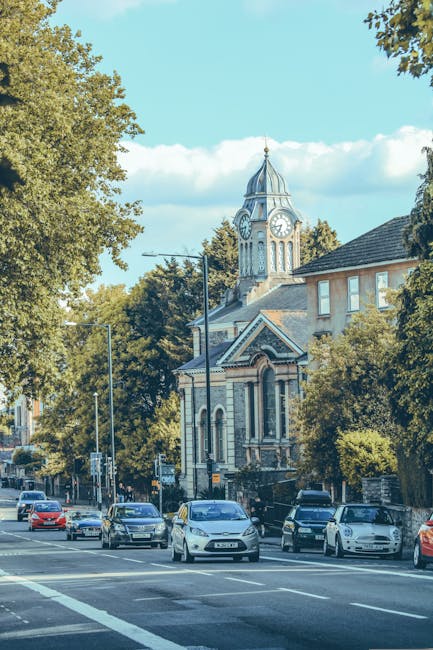
Moving Guide for Putney High Street: Best Routes & Parking
If you are planning a move around Putney High Street, you already know the main challenge is not just lifting boxes. It is getting a van in, finding a sensible route, and making sure parking does not turn a straightforward move into a day-long headache. This Moving Guide for Putney High Street: Best Routes & Parking pulls together the practical bits people usually discover too late: where access tends to be tighter, which road choices are usually easier, how to think about loading space, and what to do before moving day so you are not circling the block at 8am with a sofa in the back.
Truth be told, the difference between a smooth move and a stressful one often comes down to planning the last 200 metres. That is especially true on a busy high street where traffic, delivery vehicles, pedestrians, and permit considerations all seem to arrive at the same time. The good news? With a sensible route plan, a realistic parking strategy, and the right kind of moving support, the whole process becomes far more manageable.
In this guide, we will walk through route options, parking realities, useful moving tactics, compliance considerations, and a practical checklist you can actually use. If you are moving home, relocating a small office, or simply transporting furniture on a tight timetable, this should help you feel a lot more in control.
Table of Contents
- Why Moving Guide for Putney High Street: Best Routes & Parking Matters
- How Moving Guide for Putney High Street: Best Routes & Parking Works
- Key Benefits and Practical Advantages
- Who This Is For and When It Makes Sense
- Step-by-Step Guidance
- Expert Tips for Better Results
- Common Mistakes to Avoid
- Tools, Resources and Recommendations
- Law, Compliance, Standards, or Best Practice
- Options, Methods, or Comparison Table
- Case Study or Real-World Example
- Practical Checklist
- Conclusion
- Frequently Asked Questions
Why Moving Guide for Putney High Street: Best Routes & Parking Matters
Putney High Street is one of those places that looks simple on a map and then becomes, well, a bit more interesting once you are there with a removal van. It is busy, central, and used by pedestrians, shoppers, buses, delivery drivers, cyclists, and residents all at once. That mix matters because moving day is not just about transportation. It is about timing, access, and not blocking the road while you are trying to find your bearings.
A move near a high street can become complicated for a few predictable reasons:
- Traffic can build quickly during peak commuting and shopping periods.
- Loading space may be limited or already occupied.
- Buildings may have narrow entrances, steps, or awkward rear access.
- Parking rules may change by bay, time, or location.
- Larger vehicles may need extra room for turning and unloading safely.
That is why route planning and parking strategy are not side issues. They are central to the move. Even a very well-packed van can become a problem if it cannot stop close enough to the entrance. And if you are moving furniture, you will feel every extra trip. Every extra trip. Let's avoid that.
For some people, the real concern is time. Maybe your lease handover is fixed to the hour, or you need to clear a property before contractors arrive. For others, the concern is simply keeping costs sensible. Either way, the more you understand the route and parking picture in advance, the fewer surprises you get on the day.
If you are arranging a home move as part of a broader relocation, it can also help to look at home moves support and decide whether you need packing help, vehicle-only transport, or a fuller service. Sometimes the best route is not just a road. It is the whole plan.
How Moving Guide for Putney High Street: Best Routes & Parking Works
The basic idea is straightforward: choose the least disruptive route, identify the safest loading point, and make sure the vehicle can stop legally and long enough to complete the job. In practice, that means thinking in layers.
1. Start with the vehicle, not just the address
A small van, a medium removal truck, and a larger lorry all behave differently on a busy high street. The bigger the vehicle, the more important turning space, road width, and road position become. If you are comparing vehicle options, a smaller vehicle or a flexible man and van style service can be easier for tight access and shorter transfer distances.
2. Work out where loading actually happens
The front door is not always the best point of entry. Sometimes a side street, rear access, or a nearby loading bay will be more practical. This is where local awareness matters. The ideal stopping point is the one that reduces carrying distance without creating a parking issue or getting in the way of traffic flow.
3. Plan the move around timing
On a busy road like Putney High Street, timing can matter as much as geography. Early morning often gives you more breathing room. Midday can be busier with retail activity. Late afternoon may overlap with commuter pressure. If you can shift the move by even an hour or two, the difference can be noticeable. You will feel it in the noise, the traffic, and the number of times you have to wait for a gap.
4. Match the route to the job
If you are moving a full household, the route must support repeated loading and unloading. If you are moving just a few pieces of furniture, a more nimble vehicle may be enough. For larger jobs, it may be worth considering a moving truck or even removal truck hire if the route and access are suitable.
The wider point is this: moving on a high street is never only about driving. It is about micro-decisions. Where to stop, how long to stop, which side of the road gives safer unloading, and whether the building access makes sense for the size of the team and vehicle.
Expert summary: The best moving route is usually the one that minimises turning stress, keeps the vehicle legally positioned, and shortens the carry from van to door. Fancy? No. Effective? Very.
Key Benefits and Practical Advantages
Good route and parking planning gives you more than convenience. It gives you control. And on moving day, control is worth a lot.
- Less waiting time: You spend more time moving items and less time searching for a place to stop.
- Lower risk of damage: Shorter carry distances and safer vehicle positioning reduce knocks, scrapes, and rushed lifting.
- Better use of labour: Movers can work efficiently when they are not trekking back and forth across the street.
- Less stress for neighbours and pedestrians: A tidy, well-run move feels more respectful and less disruptive.
- More predictable costs: Efficient access often means fewer delays and a cleaner timetable.
There is also a subtle benefit people miss: confidence. When you know your parking plan, you stop second-guessing every turn and every stop. That keeps the day calmer, and calm moves tend to go better. It sounds almost too simple, but it really is true.
If you are arranging a full service move, looking into packing and unpacking services can further reduce pressure on the day. The less you are doing under time pressure, the fewer mistakes tend to creep in. Boxes get labelled properly. Fragile items get handled with more care. Everyone breathes a bit easier.
Who This Is For and When It Makes Sense
This guide is useful for a fairly wide range of people, but it is especially relevant if you are moving in or out of a property close to the high street and do not have generous off-road space.
Home movers
If you are relocating from a flat, maisonette, or terraced property, parking and access may be the biggest headache. One-way streets, limited frontage, and narrow pavements can make loading more complicated than expected. A straightforward house move still needs a route plan, especially if there are multiple trips or heavy furniture pieces.
Students, sharers, and short-term tenants
For smaller moves, people often assume the job will be easy. Sometimes it is. Sometimes it is the opposite, because the move is compressed into a short window and everyone has somewhere to be by lunchtime. If that sounds familiar, using a flexible vehicle option such as man with van support can be a practical middle ground.
Small offices and local businesses
Businesses moving around Putney High Street need to think about customer flow, delivery access, and staff disruption. An office move with poor parking planning can interfere with operations very quickly. If that sounds like your situation, it may be worth reviewing office relocation services as part of a broader business continuity plan.
Furniture-only moves
Maybe you have bought a sofa, a wardrobe, or a few heavy pieces and need them moved from one property to another. In that case, the challenge is usually not the volume. It is the awkwardness of the item and the time needed to get it in and out safely. A furniture-focused service like furniture pick up may be enough, provided the route and parking are handled properly.
To be fair, if your move involves heavy items, a narrow stairwell, or very limited stopping space, this guide becomes useful even before you book anyone. It helps you ask the right questions. And that alone can save a lot of grief later.
Step-by-Step Guidance
Here is a practical way to approach moving day around Putney High Street without overcomplicating it.
Step 1: Confirm the exact access point
Do not rely on the postcode alone. Check the entrance, the floor level, the width of the passage or stairwell, and whether there is rear access. If there is a building manager or concierge, ask in advance where loading usually happens. One short conversation can save half an hour later.
Step 2: Decide what type of vehicle makes sense
Choose the vehicle based on access as much as volume. A bigger vehicle is not always better. In some cases, a smaller van that can stop more easily and make more than one trip is the smarter option. If you are unsure, compare the job against a standard home move or commercial setup and decide what level of capacity you truly need.
Step 3: Map the route with traffic in mind
Consider how you will approach the high street and where the vehicle can safely pull in. Avoid planning a route that ends with awkward turns or last-second lane changes. That sort of thing creates stress nobody needs. A move should not feel like a rally stage.
Step 4: Sort parking and stopping arrangements
Identify legal stopping options near the property. If a bay is likely to be available, confirm the timing. If loading needs to be quick, assign one person to watch for vehicles, pedestrians, and the clock. That person does not have to be dramatic about it. Just alert. Like a slightly caffeinated traffic marshal.
Step 5: Pack in the order you will unload
Put the first items out of the property closest to the back of the van, or at least make them easy to reach. Heavy and bulky items should not be buried under small boxes. It seems obvious, but on a moving day with noise, doors open, and people asking where the kettle is, obvious things do get missed.
Step 6: Build in a buffer
If your timetable is tight, add a margin. Not a huge one, just enough to absorb a parking delay, a slow lift, or the occasional waiting pedestrian. A buffer is not wasted time. It is insurance against the tiny delays that always happen.
Step 7: Check the final handoff
Before leaving, make sure the property is clear, the keys are where they need to be, and the van route out of the area is still realistic. It is surprisingly easy to focus so much on unloading that you forget the exit plan. Then everyone is standing around with an empty mattress and nobody wants that.
Expert Tips for Better Results
A few small choices can make a big difference on a busy London high street.
- Move early if you can: Earlier starts often mean less congestion and easier parking.
- Use two people for guidance: One person spotting traffic while another guides the vehicle is safer than trying to do both at once.
- Pre-label fragile items: This helps everyone place them carefully the first time, not the second or third.
- Keep essentials separate: Keys, documents, chargers, kettle items, and basic cleaning supplies should not vanish into the main load.
- Choose the right service level: A lighter move may suit a smaller vehicle, while a full property transfer may benefit from a more complete service such as house removalists.
- Think about weather: Rain makes pavements slick and carrying more awkward. Not ideal. Not disastrous either, just another reason to plan carefully.
One practical habit we like: take a quick photo of the parking spot and the property frontage before unloading. It is not glamorous, but it helps remember what happened if there is any confusion later. Small things, really.
If your move involves mixed items, you may also want to look at commercial moves for business-style logistics or a more general service if the job sits somewhere in between. A good provider should be able to talk through access before anything is booked.
Common Mistakes to Avoid
Most moving problems on or near Putney High Street are not caused by one giant error. They come from a handful of small oversights that stack up.
- Assuming parking will be available: High street parking can disappear quickly.
- Choosing a vehicle that is too large: Bigger is not always simpler, especially where access is tight.
- Not checking building access: A lovely route means very little if the front door is down a narrow stairwell.
- Ignoring the time of day: Traffic patterns shift. Quite a lot, actually.
- Loading boxes in the wrong order: If essentials are buried, the unloading stage becomes messy.
- Leaving permits or permissions to the last minute: That can create stress that is easy to avoid.
- Underestimating walking distance from van to property: A long carry changes the pace of the whole move.
There is also the classic mistake of trying to do too much with too few people. It sounds efficient on paper. In real life, it usually means slower lifting, more hesitation, and more congestion around the vehicle. If you need help, ask for help. Simple as that.
Tools, Resources and Recommendations
You do not need a huge toolkit, but a few useful items and preparations can make the day run more smoothly.
Practical items to have ready
- Folding trolleys or sack trucks for heavier items
- Blankets, straps, and ties to protect furniture
- Boxes and tape that can handle the weight you are asking them to carry
- Clear labels for rooms and fragile items
- Phone chargers and contact details for everyone involved
Planning tools and local checks
Before moving day, check the route from your property to the nearest practical stopping point. A satellite view can help, but so can a simple walk outside at the same time of day you plan to move. You will notice things a screen will not tell you: how many vans are usually outside, whether the pavement is busy, and whether a driveway you thought was usable is actually blocked by something large and awkward.
If you want a more complete service, reviewing pricing and quotes can help you decide what level of support fits the job and how the different options compare. For some moves, a straightforward vehicle and driver is enough. For others, packing help and additional handling support make better sense.
It can also be useful to check company policies around insurance and safety. That is not about being pessimistic. It is about knowing how issues are handled if something unexpected happens. Most people never need to think about it, but it is better to understand the basics before the van arrives.
Law, Compliance, Standards, or Best Practice
For a move like this, the important thing is to stay sensible, legal, and respectful of local rules. Parking and loading restrictions can vary by location and time, so you should always check the situation directly rather than assuming a space can be used just because it looks free. That is particularly true on a busy high street where enforcement may be active and traffic flow matters.
Best practice usually includes the following:
- Using only lawful stopping or loading arrangements
- Avoiding obstructions to pedestrians, cyclists, and traffic
- Keeping access clear for emergency vehicles and residents
- Handling items safely to reduce risk of injury or damage
- Making sure any hired movers understand the access plan before arrival
There is also a general duty of care around safe lifting and vehicle operation. In plain English, no one should be rushing, dragging, or improvising around a tight parking space just to save a minute. If a route looks awkward, slow down and adjust. The calm decision is usually the better one.
For peace of mind, it is sensible to review the company's health and safety policy and, if you are booking a service, how any payments and booking details are handled through payment and security. Those details may feel administrative, but they matter when you are trusting someone with your possessions and your schedule.
Options, Methods, or Comparison Table
Different move types call for different methods. A high street move is rarely one-size-fits-all, so it helps to compare the practical options before you decide.
| Option | Best for | Strengths | Limitations |
|---|---|---|---|
| Small van / man and van | Light to medium loads, tight access | Easier parking, flexible timing, simpler route handling | May require more than one trip for bigger jobs |
| Standard removal van | Typical home moves | Good balance of capacity and practicality | Needs more room than a smaller vehicle |
| Large moving truck | Full-property or larger loads | High capacity, fewer trips | Harder to position near tight streets or busy frontages |
| Truck hire with your own labour | Confident, organised movers | Flexible if you already have help in place | More pressure on you to manage timing, loading, and safety |
The best option is not always the biggest or cheapest. It is the one that best matches the access conditions, time window, and the amount of lifting involved. If in doubt, a smaller, more manoeuvrable setup often wins on practicality, especially around a busy road with limited stopping space.
Case Study or Real-World Example
Imagine a couple moving from a first-floor flat just off Putney High Street into a larger home a few miles away. They have a sofa, bed frames, several boxes of books, and the usual "we thought we had fewer things" situation. The biggest issue is not the destination. It is the loading point.
At first, they planned to use a larger van because it would "get everything in one go." Sensible enough. But the street access is tight, and parking nearby is unpredictable during the middle of the day. So they revise the plan. They choose an earlier start, use a smaller vehicle that can stop more easily, and place the heavier items closest to the exit of the property. They also split the boxes so the first unload is the easy stuff: kitchen, bedding, essentials.
The result? Less standing around, fewer awkward lifts, and no last-minute panic about where the driver can safely wait. Nothing dramatic. Just a cleaner move.
That kind of adjustment is common in real life. A move that looks "easy enough" on paper can become much easier with one or two sensible changes. In our experience, that is usually where the win is. Not in doing more, but in choosing better.
Practical Checklist
Use this checklist to keep the move on track. It is short on purpose. Nobody needs a novel on moving day.
- Confirm the exact property entrance and any rear access options
- Check likely stopping or loading points near Putney High Street
- Choose a vehicle that suits the access, not just the volume
- Agree the start time with enough room for traffic delays
- Pack fragile and essential items separately
- Label boxes by room and priority
- Keep keys, documents, and chargers with you
- Review safety and insurance details before booking
- Make sure someone is available to guide parking if needed
- Leave a small time buffer for loading, handover, or building delays
- Take items that you will need first out of the van last if possible
- Check the exit route before you leave the property
If you are still deciding which support level you need, it can help to compare full-service handling with simpler transport-only options. For smaller or quicker jobs, a flexible man and van arrangement may be enough. For larger, more complex moves, a fuller service often reduces friction.
Conclusion
Moving around Putney High Street is absolutely manageable, but it rewards planning. The best routes are the ones that reduce stress, the best parking is the one that keeps things legal and close to the property, and the best moves are usually the ones where the practical details were handled before the van rolled up.
If you remember just a few things, let it be these: choose the vehicle for the access, not the fantasy version of the job; think about timing as much as distance; and never assume a convenient stop will magically appear at the right moment. It rarely does. And if it does, that is a nice surprise, not a strategy.
Handled well, a move near Putney High Street can feel organised, calm, and surprisingly efficient. Not effortless, perhaps. But steady. That counts for a lot on a day like that.
Get a free quote today and see how much you can save.
If you want to learn more about the company behind these services, you can also read about us or review the approach to recycling and sustainability if reducing waste is part of your move.
Frequently Asked Questions
What is the best time to move on Putney High Street?
Early morning is often the easiest time because traffic and pedestrian activity are usually lower. That said, the best time still depends on the exact property, the size of the vehicle, and whether you need to avoid commuting pressure or retail peak periods.
Do I need special parking arrangements for a move?
Often, yes, or at least a clear plan. On a busy high street, legal stopping space can be limited. It is wise to check loading options in advance and make sure the vehicle can stop without causing obstruction.
Is a small van better than a large removal truck?
Not always, but it can be. A smaller van is usually easier to position on a busy street and may suit tighter access. A larger truck may be better for bigger loads if the road space and parking situation can support it.
How far in advance should I plan the route and parking?
As early as possible, ideally before the move is booked. Even a basic route check can reveal awkward turns, limited stopping points, or access issues that affect your choice of vehicle and start time.
Can I move furniture from a shop or flat near the high street easily?
It depends on access, loading space, and item size. A single sofa or wardrobe may be straightforward with the right vehicle and a sensible stop point. Multiple heavy items, however, need more careful planning.
What should I do if parking is already taken when I arrive?
Have a backup plan. That might mean an alternative loading point, a short waiting window, or a different approach to the entrance. It is much better to decide this before the day than to improvise on a busy road.
Are packing services worth it for a high street move?
For many people, yes. Packing help can reduce last-minute stress and make loading far more efficient. It is especially useful if you have fragile items, a tight schedule, or limited help on the day.
What if my property has difficult access or stairs?
Then access should be treated as a key planning point, not a side note. Measure the route, identify tight corners, and consider whether a smaller vehicle or additional handling support would make the move safer and easier.
How do I avoid delays during a move near Putney High Street?
Keep the timetable realistic, start early if possible, pack in unload order, and make sure the parking plan is sorted before moving day. Small delays are normal; big ones usually come from poor preparation.
Should I compare moving quotes before booking?
Yes. Comparing quotes helps you understand what is included, what type of vehicle is being used, and whether the service level matches your move. Price matters, but clarity matters too.
What if I only need help with a few items?
Then a lighter service may be enough. For a handful of items or a short transfer, it can make sense to use a flexible transport option rather than a full-scale removal setup.
How do I know if a mover is suitable for a busy London street?
Ask about vehicle size, access planning, safety practices, and how they handle parking challenges. A good mover should be comfortable talking through the practical side of the job, not just the quote.